The End of Polarity: What Awakening Really Means

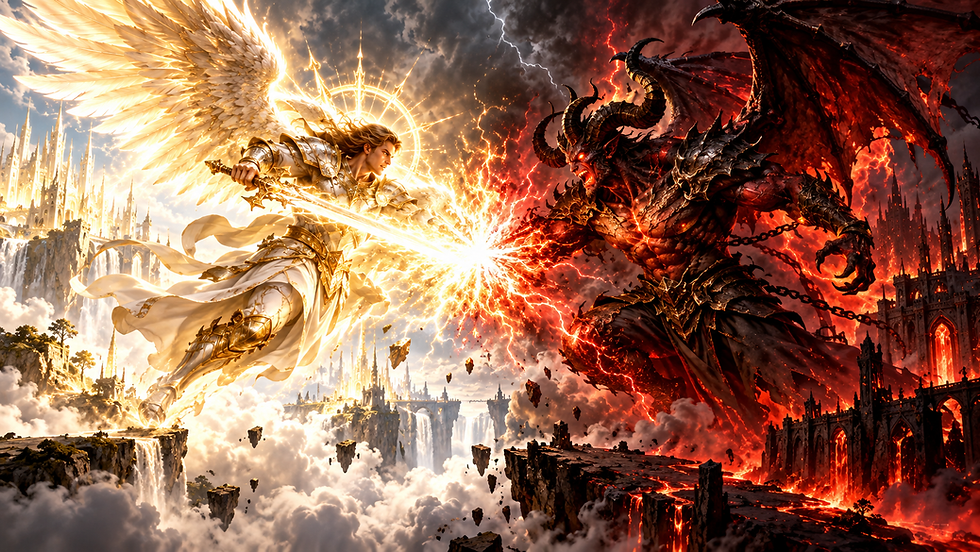
A lot of people still imagine awakening like the final scene of a movie.
The villains are exposed. The heroes arrive. The bad side falls. The good side wins. The crowd cheers. Everyone finally feels safe because the enemy has been removed.
That story is familiar because human perception loves contrast. We make sense of life through opposites: right and wrong, light and dark, awake and asleep, savior and threat. It gives the mind something to hold. It gives fear a target. It turns confusion into a plot.
But that plot is still polarity.
If awakening still requires an enemy to be destroyed, the deeper shift has not happened yet. The costume changed, but the game remained the same. One side still needs another side to lose. One group still waits for punishment to bring peace. Control still hides inside the desire to end control.
Real awakening is stranger, quieter, and far more radical. Nobody has to “take them down” in the way people imagine. Systems lose force when human beings stop feeding them. Control weakens when people stop organizing their inner lives around control. Darkness does not need to be murdered by light. It gets exposed, understood, integrated, and deprived of the energy that kept it alive.
That is a completely different ending.

Polarity makes the world feel simple
Polarity is seductive because it reduces life to a clean story.
There is a good side and a bad side. There are people who understand and people who do not. There are those who must be saved and those who must be stopped. Once the mind accepts that frame, everything else gets filtered through it.
This can feel empowering at first. Anger gives energy. Certainty gives relief. Belonging to the “right” side gives identity. The nervous system relaxes for a moment because the chaos has a shape.
But polarity always comes with a cost.
It keeps attention trapped outside. It says peace will come later, after someone else changes, confesses, loses power, or disappears. It asks the soul to wait for external victory before it allows internal freedom.
That is why polarity can survive even inside spiritual language. A person can speak about light, truth, awakening, ascension, healing, and unity while still carrying the same old structure underneath:
Someone must be defeated.
Someone must be blamed.
Someone must be humiliated.
Someone must be cast out before peace becomes possible.
The words sound elevated, but the consciousness remains divided.
This does not mean harm should be ignored. It does not mean abuse, corruption, manipulation, or violence should be excused. Clear seeing matters. Boundaries matter. Accountability matters.
The difference is the energy behind the response.
Polarity says, “I need you to be destroyed so I can be whole.”
Awakened clarity says, “I see what is happening, and I will no longer participate in it.”
Those two states create very different futures.
One keeps the battle alive. The other withdraws consent from the pattern.
The movie ending is still part of the old dream
Movies often end with a dramatic defeat because it satisfies the emotional arc. The villain falls. The hero survives. The audience gets release.
Real consciousness does not move like that.
Human beings carry the patterns they fight. A society can overthrow one ruler and still recreate the same hierarchy. A community can expose one manipulator and still organize itself around fear. A person can reject one form of control and still try to control everyone around them in the name of truth.
That is why the fantasy of “taking them down” is incomplete.
It assumes the problem lives only in a person, a group, a system, or a hidden enemy. Remove that enemy, and freedom arrives. But systems are not held up by villains alone. They are held up by obedience, fear, addiction, dependency, silence, reward, comfort, and identity.
A controlling system needs participation.
It needs people to believe they have no choice. It needs people to outsource authority. It needs people to crave protection more than truth. It needs people to repeat its logic in their homes, relationships, beliefs, and inner dialogue.
This is why inner work is not a side quest. It is central.
Whenever people ask for liberation while still worshiping domination, they rebuild the same structure. Whenever people demand truth but cannot tolerate uncertainty, they trade one dogma for another. Whenever people reject being controlled but still want to control the outcome, polarity slips back in through the side door.
Awakening reveals the mechanism.
It shows how fear becomes obedience. It shows how wounds become ideology. It shows how pain looks for an enemy because facing the wound directly feels too exposed.
The movie ending lets the audience discharge emotion. Real awakening asks the audience to stop being an audience.

Systems collapse when people stop feeding them
A system can look permanent right up until participation drops.
This is true in obvious ways. A marketplace fails if people stop buying. A belief system weakens if people stop repeating it. A relationship pattern ends when one person no longer plays the assigned role. A culture of fear loses power when enough people refuse to be managed by panic.
The same principle applies to deeper structures of consciousness.
Control feeds on attention, compliance, and emotional charge. It does not only feed on agreement. It can also feed on obsession. Constant hatred keeps a person energetically tied to the thing they hate. Constant fear keeps the authority of the feared object alive in the body. Constant outrage can become a loop that drains clarity while pretending to be resistance.
This is why “fighting darkness” can become a trap.
A person may spend years staring into corruption, deception, and harm until their whole identity forms around opposition. They know what they are against, but they no longer know what they are devoted to. Their nervous system becomes married to the enemy. Without the enemy, they would have to meet the emptiness underneath.
That emptiness is where awakening begins to deepen.
The question changes from “How do we destroy them?” to “What in us still needs this structure?”
That question is uncomfortable because it removes the easy distance. It does not blame the victim. It does not excuse the abuser. It simply refuses to pretend that collective patterns exist without collective fuel.
For example, a culture built on constant distraction depends on people avoiding their own silence. A culture built on domination depends on people believing power means control. A culture built on fear depends on people distrusting their own direct perception.
When those habits change, the outer system has less to grip.
This is not passive. It is one of the most active forms of refusal.
To stop feeding a system can mean:
No longer giving attention to fear-based narratives that keep the body in panic.
No longer participating in relationships where love is used as a bargaining tool.
No longer confusing obedience with goodness.
No longer giving spiritual authority to anyone who depends on your fear.
No longer waiting for a savior to do the work of consciousness.
The collapse begins where participation ends.
Not all at once. Not always visibly. But the root starts to dry.
Integration is not surrender to harm
Many people misunderstand integration. They hear the word and assume it means accepting everything, letting everyone off the hook, or pretending darkness is light.
That is not integration. That is bypassing.
Integration means the rejected material is brought into awareness so it stops operating from the shadows. It means seeing the roots of cruelty, greed, fear, domination, and denial without becoming fascinated by them or identified with them.
A person who integrates anger does not become harmless in the shallow sense. They become clear. They can set boundaries without needing to hate. They can act without being possessed. They can say no from presence rather than panic.
A society that integrates its shadow does not erase accountability. It becomes capable of accountability without spectacle. It stops needing public punishment as emotional entertainment. It asks better questions:
What conditions allowed this harm to grow?
Where did people look away?
Which rewards kept the pattern alive?
What must change so the same energy cannot simply take another form?
That last question matters.
If one corrupt figure falls but the culture still worships power without conscience, another figure will rise. If one abusive relationship ends but the inner wound still equates intensity with love, another version appears. If one ideology collapses but the mind still craves certainty more than truth, a new ideology takes its place.
Integration interrupts repetition.
It does not make darkness special. It does not glorify pain. It simply removes the unconscious charge. What can be seen clearly does not need to rule from below.
This is why the language of “light defeating darkness” can be misleading. Light does not defeat darkness by becoming violent toward it. Light reveals. It makes hidden shapes visible. It allows what was denied to be understood. Once something is fully seen, it often loses the mystery that gave it power.
Darkness thrives in secrecy, projection, and fear. Exposure changes the atmosphere.

Awakening removes the need for the game
The deepest shift is not the defeat of one side by another. It is the end of the need for the entire game.
That is difficult for the polarized mind to accept because the polarized mind wants resolution through reversal. The powerless become powerful. The shamed become the judges. The punished become the punishers. The old hierarchy flips.
But reversal is not freedom. It is the same structure turned upside down.
Real awakening changes the operating system. It changes what people value, what they tolerate, what they feed, and what they recognize as authority. It weakens the emotional hooks that made manipulation possible in the first place.
A person who no longer needs an enemy becomes hard to recruit into mass hatred.
A person who no longer outsources truth becomes hard to deceive.
A person who no longer confuses control with safety becomes hard to govern through fear.
A person who has faced their own shadow becomes less likely to project it onto the world and call that projection justice.
This does not create a perfect world overnight. It creates a different human being, and enough different human beings create different systems.
The change may look less cinematic than people expect. It may look like quieter nervous systems. Cleaner boundaries. Less worship of outrage. More direct perception. Fewer people handing their power to anyone who promises certainty. More people willing to leave the old stage instead of fighting for the lead role on it.
The old game requires drama. It requires sides. It requires constant emotional charge. It requires people to forget their own center.
When the center returns, the game loses its audience.
That is why awakening can feel anticlimactic from the outside. There may be no single final battle, no perfect public reckoning, no moment when every hidden thing is neatly displayed and every wrong is corrected in a way the mind finds satisfying.
The real ending is deeper.
Humanity stops needing the pattern.
The end of polarity begins inside the next reaction
The end of polarity does not begin as a grand global event. It begins in the next moment of reaction.
When fear rises, does it become perception, or does it become a demand for control?
When anger rises, does it become clean action, or does it become identity?
When harm is exposed, does awareness deepen, or does the crowd simply look for someone to hate?
These are not abstract questions. They shape the field people live in every day.
Awakening asks for maturity. It asks people to stop turning pain into a religion. It asks for truth without cruelty, strength without domination, discernment without paranoia, and compassion without denial.
That is not soft. It is harder than polarity.
Polarity gives quick answers. Awakening requires presence. Polarity gives enemies. Awakening reveals patterns. Polarity offers the thrill of victory. Awakening ends the appetite for the fight.
No one has to be destroyed for consciousness to rise.
What has to end is the unconscious agreement with the game itself. The hunger for punishment as proof of safety. The belief that peace comes after a final enemy falls. The habit of meeting control with more control and calling it liberation.
The ending people are waiting for may never arrive like a movie scene.
It may arrive as a withdrawal of energy. A loss of fascination. A refusal to obey fear. A clear no. A quiet yes. A thousand private choices that stop feeding the old machine.

The end of polarity is not a side winning.
It is the moment the whole structure becomes unnecessary.
That is what awakening really means. Not a better war. Not a cleaner enemy. Not a sacred excuse to keep the nervous system addicted to conflict.
Awakening is the return of consciousness to itself. Once that happens, the old game can still make noise, but it no longer has the same claim on human attention.
And without attention, it cannot survive.

Comments